
This American Mom Traded a Tiny Apartment in LA for a Château in Rural France
Kamille Longstreet on discovering her baseline was anxiety, the surprising thing her landlord said when she interrupted her nap, and the three-word philosophy she and her husband swear by.


Welcome to Women Who Belong to Themselves, a monthly series where I ask a fellow Substack creator 13 questions (the sacred feminine number) about the choices, practices, and hard-won wisdom behind creating lives that feel genuinely their own.

A couple of months into our arrival in Bordeaux last fall, Chris and I were curled up on the couch in our Airbnb, trying to decide on a new series to watch in the evenings.
Then we remembered one that some of our friends in Colorado encouraged us to watch: Castle Impossible. We were immediately pulled in.
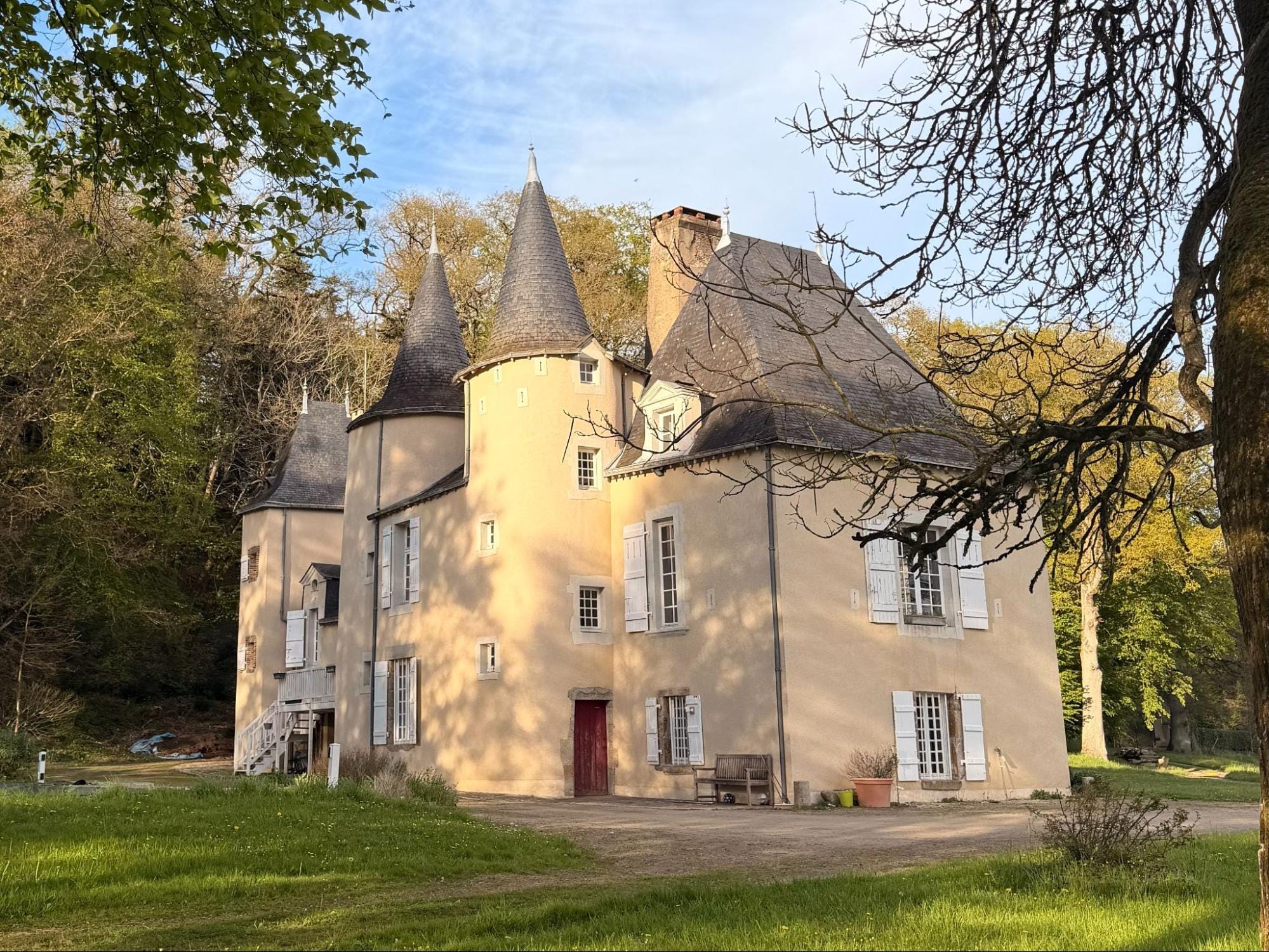
I’ve been fascinated by fairy tales my whole life, and now that I actually live in France — where châteaux appear around corners like they’re nothing — I’ve started meeting women who are doing the thing I’d only ever dreamed about: buying one, lovingly, courageously restoring it, and making it their own.
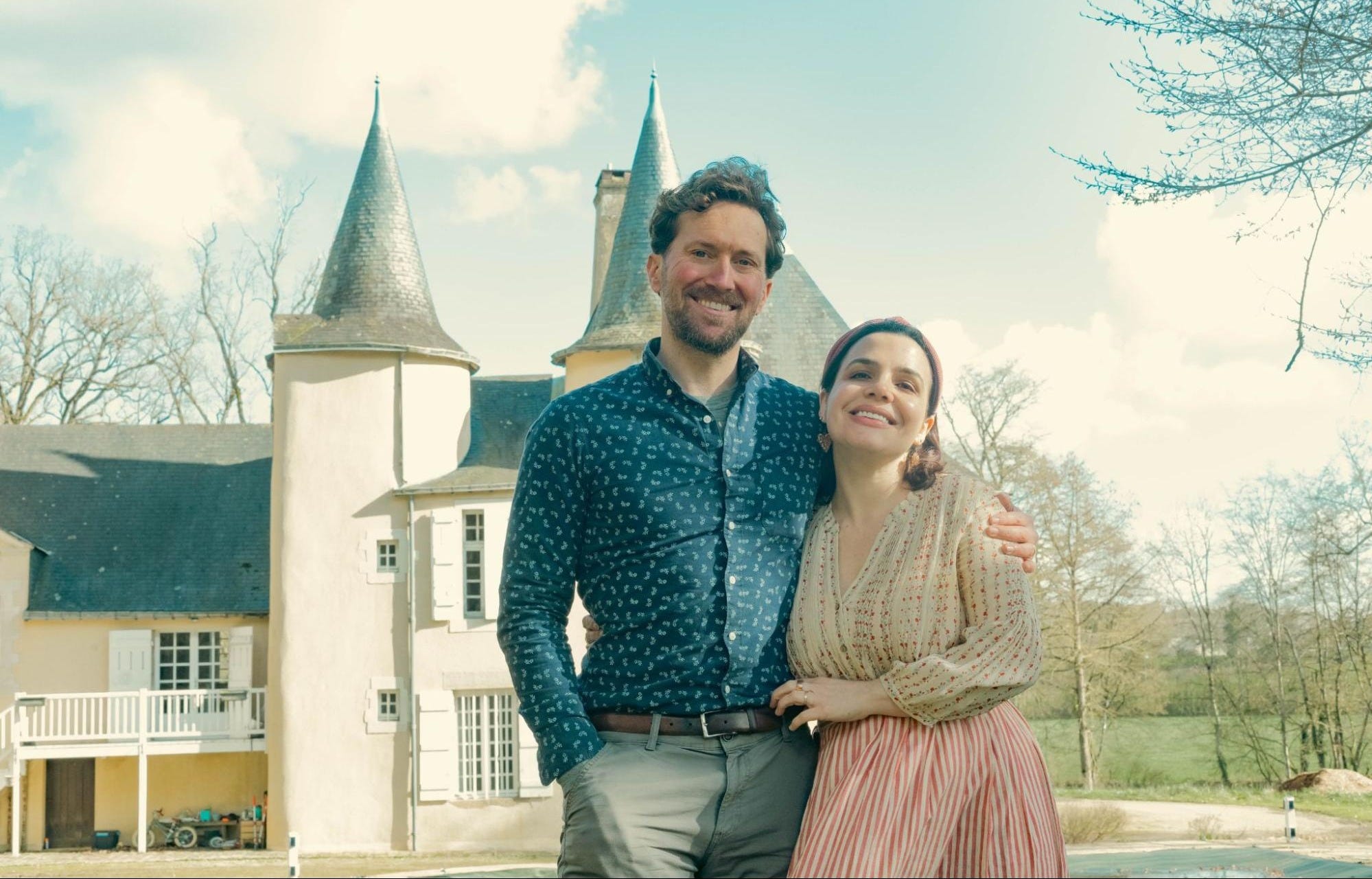
Kamille Longstreet is one of those women. She traded a one-bedroom apartment in Los Angeles for a château in rural France (husband, two small children, and all), and I met her here on Substack.
Like that series from last fall, her story pulled me in so deeply that I knew I wanted to talk to her more.
Sara: When in your day do you feel most like yourself? Is there a particular place on the château grounds where you feel this most clearly?
Kamille: I feel most like myself when I’m writing or creating, which tends to happen in the late morning and again in the mid-afternoon. There’s something about those windows of the day that feel like mine.
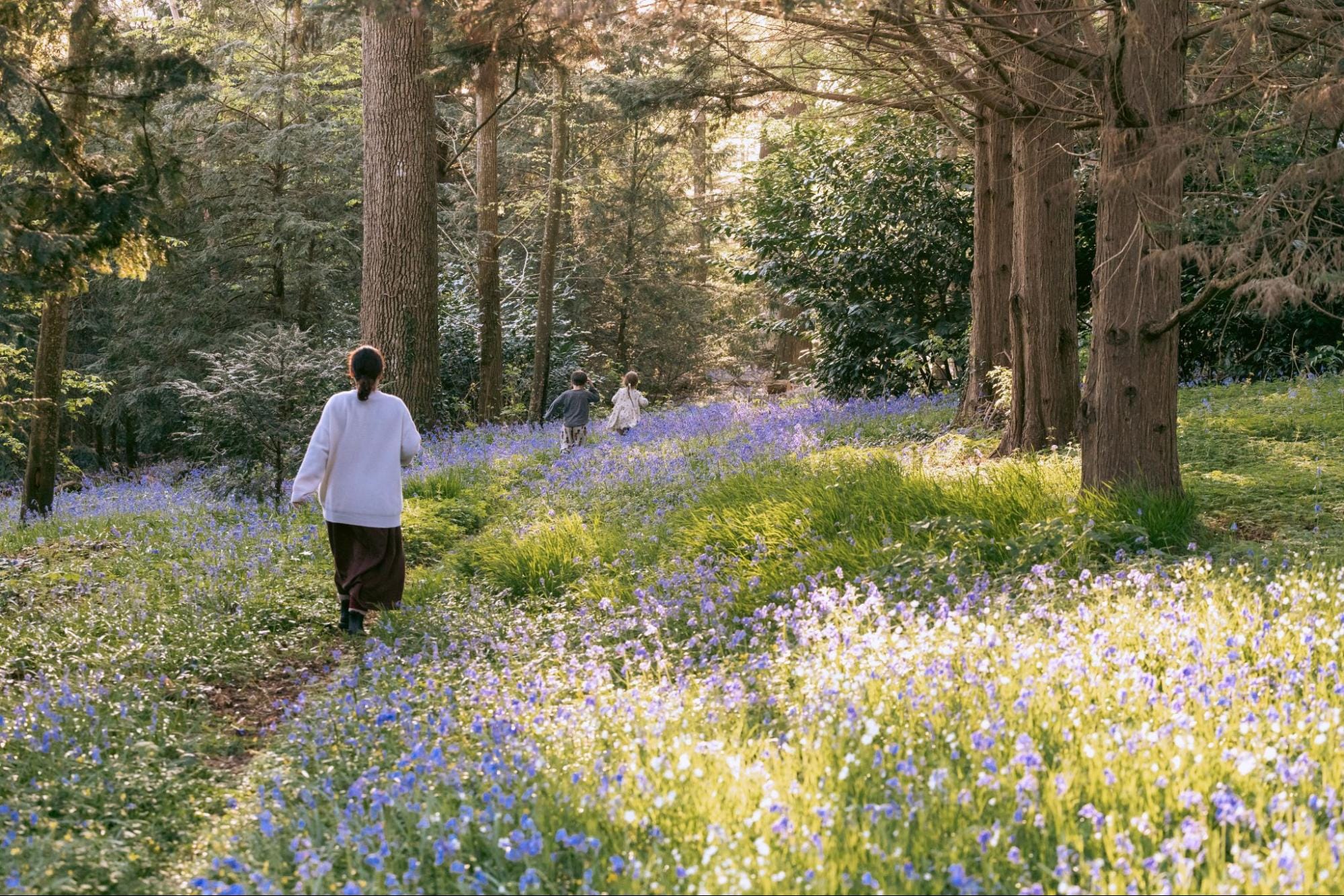
As for a place on the grounds, we’ve only been here a few months, so I’m still figuring that out, honestly. But this spring, it’s been the forest. The bluebells came up, and we’ve been walking in there in the evenings, after dinner. It does something to you - puts you back in that place of childlike wonder that adulthood is so efficient at eroding. Definitely a deep sense of self in that forest.
Sara: What does “belonging to yourself” mean to you at this stage of your life? Has that meaning shifted between living in California and now France?
Kamille: Oh, it’s shifted completely.
In California, belonging to myself was very tangled up with ‘being somebody.’ Getting recognition, earning money, winning - that was the whole game, especially coming from a music career in Los Angeles, where that energy is basically in the drinking water. I didn’t even question it. That’s just what it meant to feel like you mattered.
Here, it’s almost entirely about time. What I do with it, what I choose to protect, what I’m willing to say no to. That shift has been one of the most significant things France has given me - this radical reconfiguration of what actually counts. I earn less than I might have otherwise. I’ve probably missed some opportunities. And I’ve never felt more like myself.

Sara: In one of your posts, you wrote about the disorienting silence of rural France after years of California hustle culture — and how slowly, over months, you started to hear things you hadn’t been able to hear before.
You wrote: “That’s the thing about fog. You don’t know it’s fog until someone turns on the light.” What was the first thing you could finally see clearly once the fog lifted?
Kamille: The first thing I saw clearly was that my normal baseline had just been low-level anxiety. In Los Angeles, I was always slightly on edge, always slightly behind, always scanning for the next opportunity or side hustle. It was so constant that I had stopped registering it as anxiety. I thought that was just how adults felt.
When that started to lift in France, the first feeling wasn’t peace— it was disorientation. A kind of free-falling, and it felt scary at first. I kept waiting for the other shoe to drop.
But gradually something changed, and I started measuring differently. Not against other people’s success or my own ambition, but against simpler things, like, did I rest today, did I eat well, did I actually talk to my kids?
And here’s the thing about France: if there’s any competition at all, it’s about who’s resting the most, who took the longest lunch, who got the most time at home with their family. It’s the exact inversion of everything I’d been trained to want. It’s been genuinely life-changing.
Sara: Restoring a historic property is an enormous undertaking under any circumstances. What drew you specifically to a château?
Kamille: Honestly, it was a childhood dream— one I never thought I’d actually get to have!
There are so many stunning properties in France that are not châteaux: gorgeous, more affordable, and with less maintenance. Plenty of sensible options.
But I wanted the castle, with the pepper pot towers. The thing that looks like it belongs in a fairy tale, because somewhere in my brain, a very young version of me decided that was the dream, and I wanted to realize that vision.
I’d always assumed you had to be Grammy-winning-millionaire rich to do it. Then, during the pandemic, I started doing actual research and discovered there were châteaux in France that were, and I use this word loosely, affordable (especially compared to ordinary 2-bedroom homes in Los Angeles, which were looking like our other option). That was the door opening.
But beyond the aesthetic, we wanted something we could bring back to life. A historic property with stories in its walls and a future we could help write. There’s something about seeing a dream through—even a slightly ridiculous one—that does something to your soul.
I recommend it, with the caveat that you should own sturdy shoes and have a high tolerance for paperwork.
Sara: Are there any daily or weekly rituals that help you stay rooted in this new life, especially during the harder seasons of renovation and reinvention?
Kamille: Strength training, without question. Three days a week, non-negotiable, regardless of what else is happening (even when I’m traveling). It keeps my spirits up, keeps me physically strong, and honestly, I think it’s a significant part of why I don’t get sick as often as I might - two small children in school is essentially a virus subscription service.
The other thing is my walking pad - a foldable treadmill I hop on for ten or fifteen minutes after meals. Writing is a sedentary life, and I needed a way to move during the colder months when going outside felt less appealing. It sounds small, but it keeps my head straight, especially during the harder stretches.
Neither of these is glamorous. But they’re mine, and they work.
Sara: I’m right there with you on the strength training and walking! Those are two things that have been foundational for me in my transition.
Also, you’ve written about your children having space to run barefoot, dig in gardens, and just be kids. What are you seeing in them now that you couldn’t have seen in California?
Kamille: So many things. In Los Angeles we lived in a five-hundred-square-foot one-bedroom apartment with no balcony, right by the beach - the location which sounds idyllic until you remember the area wasn’t particularly safe and sending small children outside alone wasn’t really an option. We were inside a lot, in a small space, which was, to say the least, hard.
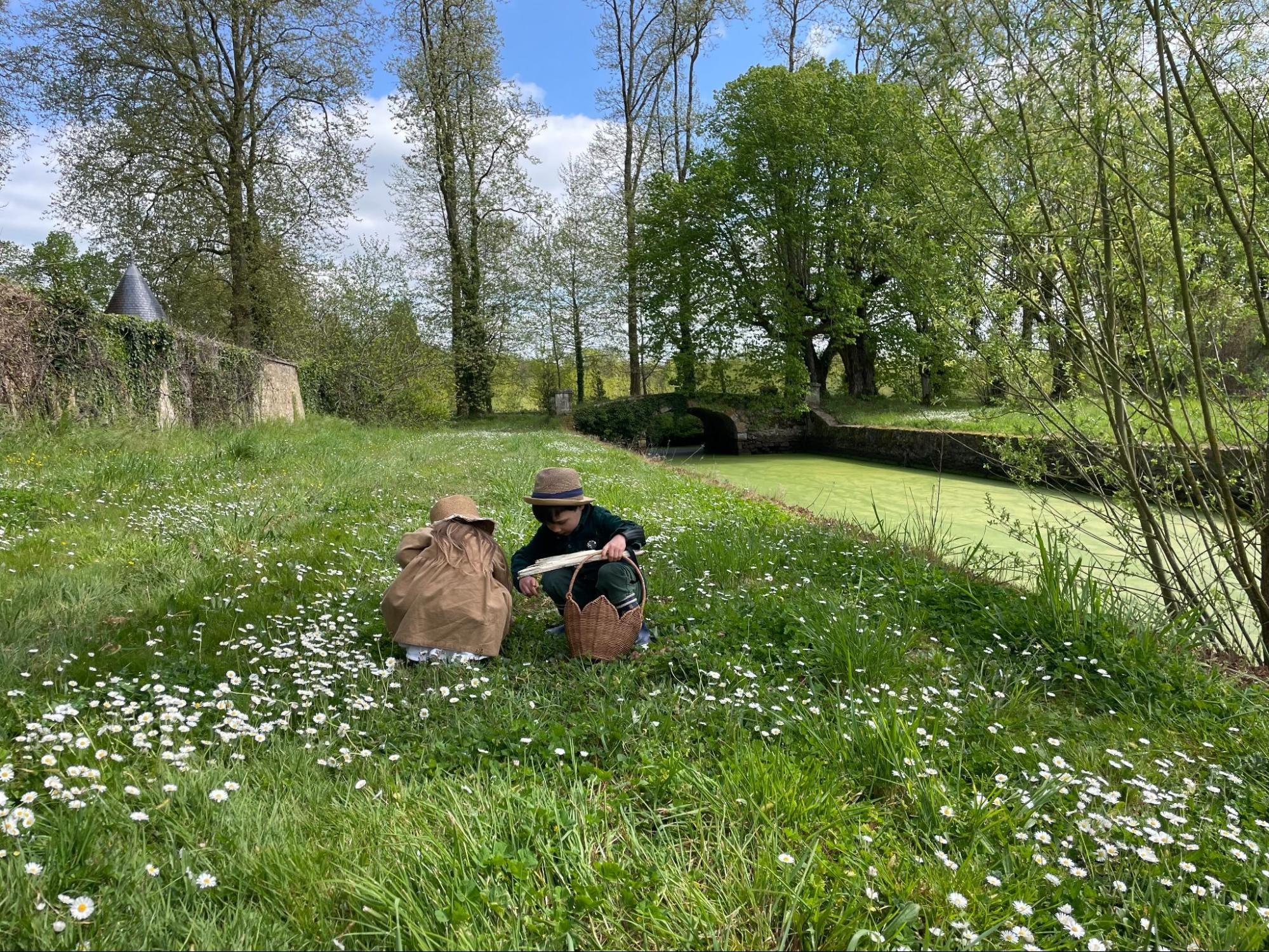
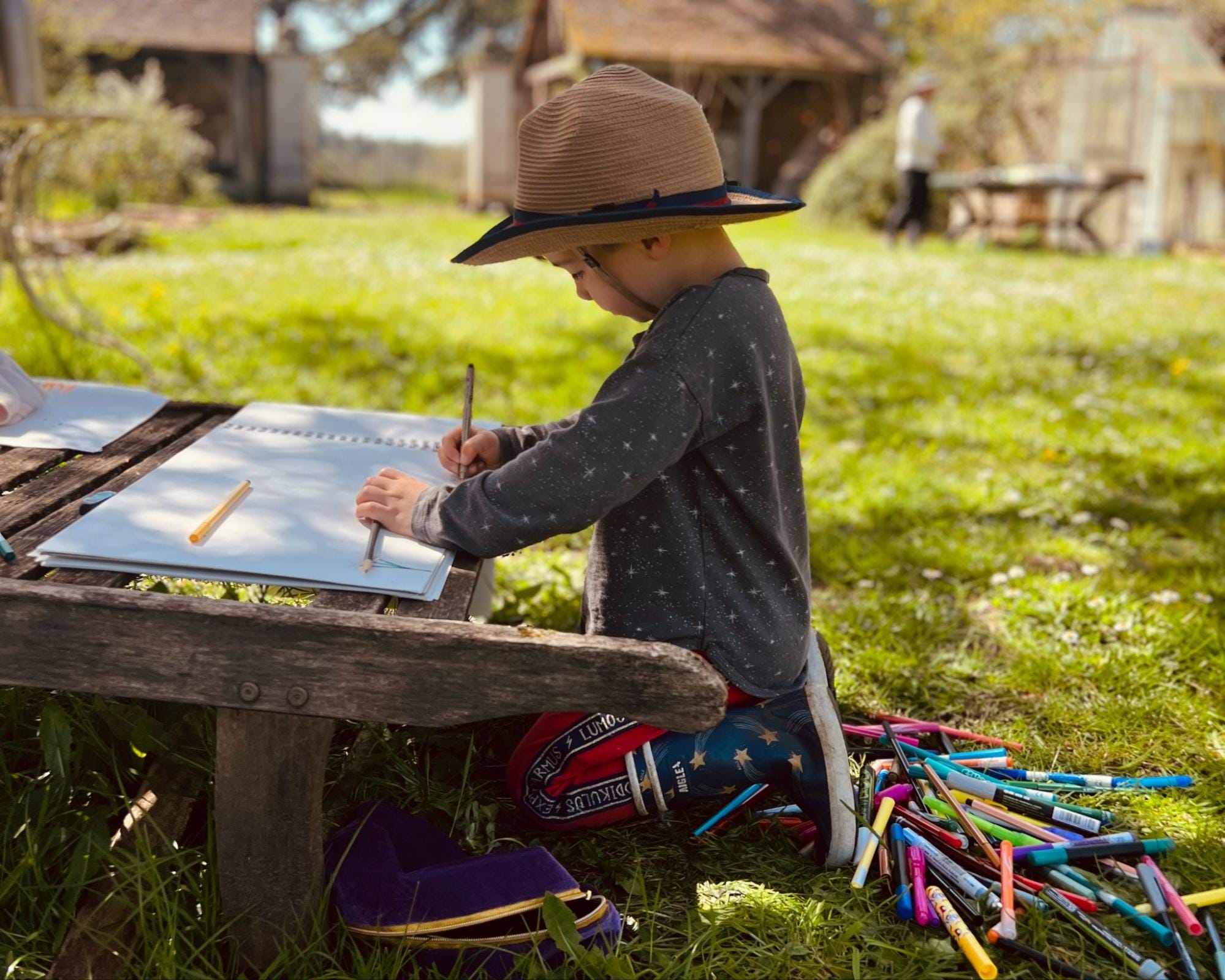
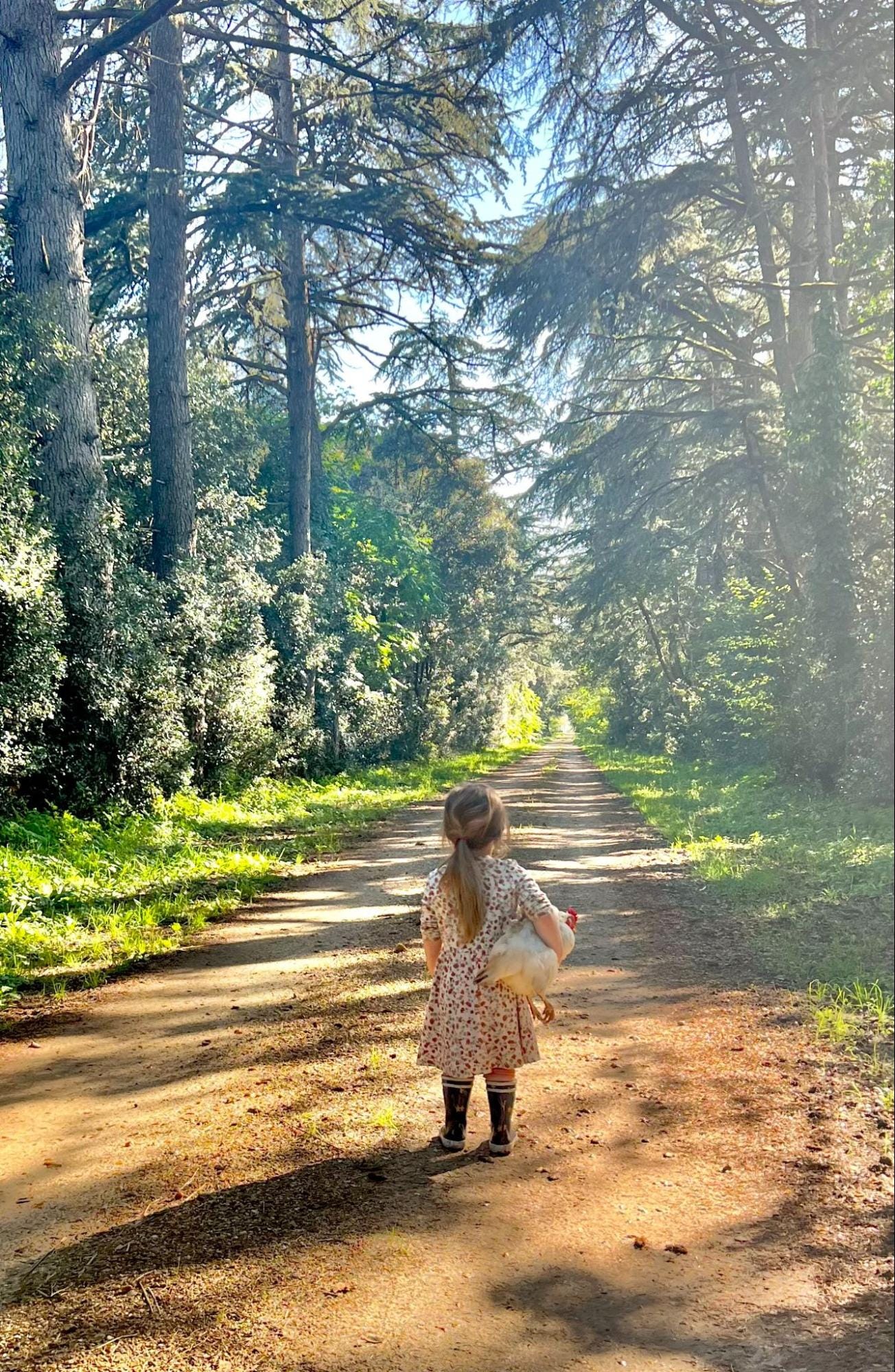
Here, the kids are outside constantly. They have chickens to care for (we had bunnies for a while too) which teaches them things about responsibility and empathy that I don’t think I could have manufactured any other way. They garden with us and eat food they’ve grown themselves with this extraordinary pride that is beautiful.
And they make things. Our son wanted a trident for his birthday - in Los Angeles I probably would have ordered the plastic Amazon version without thinking twice. Here, my husband worked with him to build one out of our scrap wood. He’s made so many things since we moved here. That kind of making does something to a child’s confidence that no purchased object ever could.
They also speak two languages now. They’ve changed schools twice, adapted to a fully French environment from scratch, learned to survive and then thrive in a place where nothing was familiar. They’ve developed so much flexibility and resilience, and it’s delightful to watch.
And on Wednesdays, there’s no school here, which means we have a full day together every week. Every six weeks, they also get two weeks off. The summers are long. The time we get with them has been one of the greatest unexpected gifts of this whole adventure.
Sara: I know from my own marriage that there’s a new level of intimacy that comes from building something together under pressure. Renovating a historic property together, in a foreign country, without fluent French or a local contractor network — what has this revealed about you and your husband, Sean, as partners?
Kamille: I’ll be honest - when we first made the move, I was a tad worried that spending this much time together might be too much of a good thing. In Los Angeles, he was teaching full-time, and I’d see him in the mornings, evenings, and weekends. There was built-in space. Suddenly, we were both working from home, both navigating a foreign country, both in the deep end simultaneously.
It’s been the opposite of what I feared.
We complement each other well—our skills, our temperaments, the way we handle problems. And there’s something about being two Americans in rural France, neither of you quite fluent, both figuring it out in real time, that has created an us-against-the-world solidarity. Every small win feels like a shared victory. Every hard day is something we’re in together.
We’re closer than we’ve ever been. I didn’t expect that to be one of the renovation’s outcomes, but here we are!

Sara: What books are on your nightstand?
Kamille: I wish I had a more sophisticated answer to this question!
I read to my kids a lot. We just finished the entire Percy Jackson series, and before that, worked our way through A Wrinkle in Time.
For myself, my audiobooks so far this year have been Project Hail Mary by Andy Weir (which might be my favorite book I’ve ever read), followed by Dark Matter (which was fine but not that great), and now I’m making my way through the Dune series.
I have a small tower of self-improvement books I fully intend to read. The Amazing Generation by Jonathan Haidt and Catherine Price is next, but I’m a fiction person at my core, and the non-fiction keeps getting delayed. This probably says something about me (drawn too much to the imaginary?), but it is what it is, and I’ve made my peace with it.
Sara: My husband recently read Project Hail Mary too, and loved it! And as I’m getting older, I’m reading more and more fiction. I used to reserve that only for vacations, but now I’m finding it relaxing to read it more regularly.
What’s a simple luxury in your everyday life now that wasn’t available to you in California? And what’s a simple luxury from California that you miss the most?
Kamille: The eggs. Having our own chickens and walking out to collect eggs in the morning is a simple daily pleasure here. Growing our own food is another one - there’s something about eating a tomato you grew yourself that truly tastes categorically different from one you bought.
And sleep. We go to bed early now - same time as the kids (most nights). No TV before bed, which was a significant ritual in California. The shift happened partly because rest isn’t something that raises eyebrows here. Our landlord caught me lying on the sofa once and immediately texted to apologize for disturbing my nap. I texted back frantically: I wasn’t napping! She told me, very calmly, in person a few weeks later: you don’t have to feel bad about napping here, Kamille. That’s part of our culture.
I felt a weight lifted from my shoulders that I hadn’t even known was there.
What do I miss from California? Honestly, the convenience. Americans don’t realize how cheap things are there until they try to buy furniture in France. Or toys. Or renovation supplies. The big ticket items - housing, healthcare, education, food - are much more affordable here in France. But the everyday things cost more and Amazon doesn’t arrive the next day and sometimes shops are closed at hours that feel completely arbitrary. I’m learning to work with this. I genuinely miss Target, though. So affordable, and decor that is respectable and lovely!
Sara: I want to try some of those eggs! And, I agree that furniture is much more pricey here, which I didn’t expect.
What’s your favorite way to spend a slow Sunday morning in rural France?
Kamille: My husband makes Dutch babies - a kind of baked pancake (if you haven’t had one, you should), and we have a long, completely unrushed breakfast. Sundays in France are protected and sacred - almost nothing is open. There’s nowhere to be. So we’re outside with the kids, doing some gardening, taking a walk, and sometimes even ending up watching a film together in the afternoon. It’s the day that feels most like the life we were trying to build when we made this decision. I’m protective of it.
Sara: I’ve never tried a Dutch Baby, but now I’m very curious! Aside from those (they sound amazing), what’s the best part of this new life? And what’s the hardest part?
Kamille: The best part is the time. Time with each other, time outside, time that belongs to us rather than to a schedule someone else set. We get Wednesdays with the kids every week, long school holidays, summers. I didn’t grow up expecting that kind of time with my children to be possible, and it’s turned out to be the thing I’m most grateful for.
The hardest part is the distance from family. Most of our loved ones are back in California, and we miss them so much, and in a way that doesn’t really get easier, just more familiar, I suppose.
The saving grace is that we have a place people genuinely want to come visit (we get more visitors now than we ever did in our Los Angeles apartment!), which is its own kind of gift. And FaceTime exists, which makes the distance much more manageable than it was even 10 or 20 years ago.

Sara: What feels most alive or most true for you to name, as a woman in this season of your life?
Kamille: Choice.
The ability to choose: where I live, how I spend my time, what I’m willing to be tired for. So much of my earlier life, I operated as though I didn’t have choices, or that the choices available to me were too expensive to make.
What I’ve learned, mostly through making some fairly irrational decisions, is that the older you get, the better you get at identifying which sacrifices you’re actually willing to make. And then you can choose accordingly.
My husband and I say “choose your hard” a lot. Living in France as Americans is hard— the language, the paperwork, the distance from everyone we love.
Renovating a centuries-old castle is hard. But we chose these hard things. We decided we wanted them more than we wanted the things that were hard in California.
That distinction—between a hard you chose, and a hard that’s just happening to you— turns out to make all the difference.
Sara: My husband and I say, “choose your hard” a lot too. Choosing to immigrate to France is hard, and one that we’re happily choosing, too.
What do you most want women who are still in the fog to know?
Kamille: That the fog can lift. That’s the main thing.
It doesn’t usually happen dramatically or all at once. It’s gradual, and sometimes it can even feel like nothing is happening, when actually everything is shifting, slowly, with every small, micro decision you make in the direction of the life you actually want.
And I’d say: don’t be too afraid of the irrational choice. Logic is useful, but it has limits, especially when it comes to dreams. And most of the things worth doing in life require a certain amount of throwing logic to the wind and trusting that you’ll figure it out when you get there. That’s been my approach for years now. Make the choice, then work out how to make it work.
It’s terrifying and also extremely good fun. Highly recommend.

Sara: Thank you, Kamille, for giving us such a candid glimpse into château life.
And, dear reader, we’d love to hear from you!
What’s a hard you’ve chosen— one that feels entirely worth it?
Please let us know in the comments (I joyfully respond to each one).
(And if you enjoyed this post, the little ❤️ below means more than you know.)
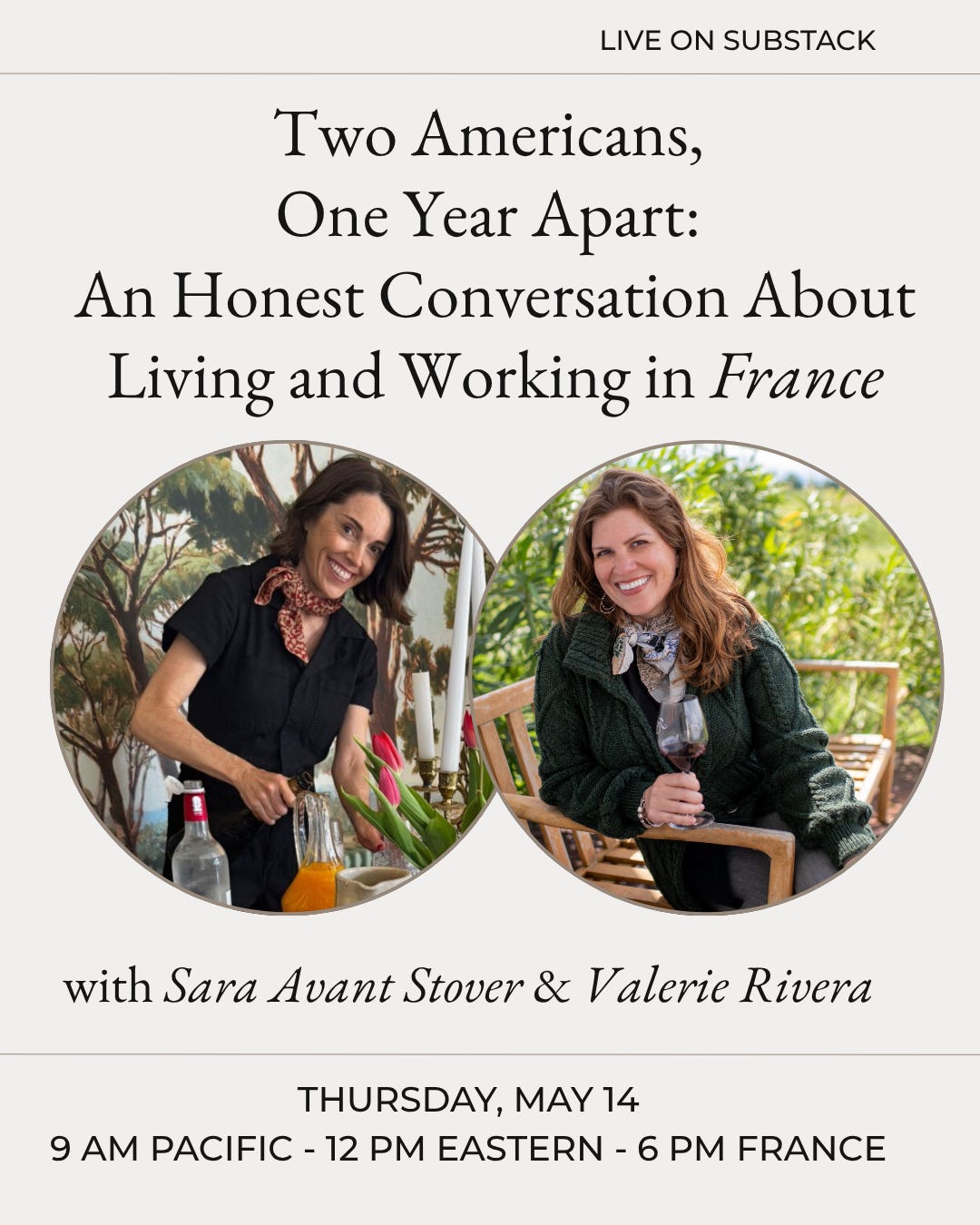
P.S. You’re invited to join me this Thursday, May 14, for a Substack Live with my friend, Valerie Rivera , creator of Delightfully Disoriented en France.
We’re both Francophiles in our forties who are passionate about business. We both work with clients, we both travel for it, we both write here on Substack. And, this year, we started to meet up for girls’ days here in Bordeaux to talk about what it means to do all of that from France.
This Thursday, we’re taking our girl talk live.
Join us for a candid conversation about l’art de vivre, working from abroad, and what our new lives in France are teaching us day-to-day.
Here’s where to join us live (and we’ll also post the replay on Substack after).
About Kamille Longstreet
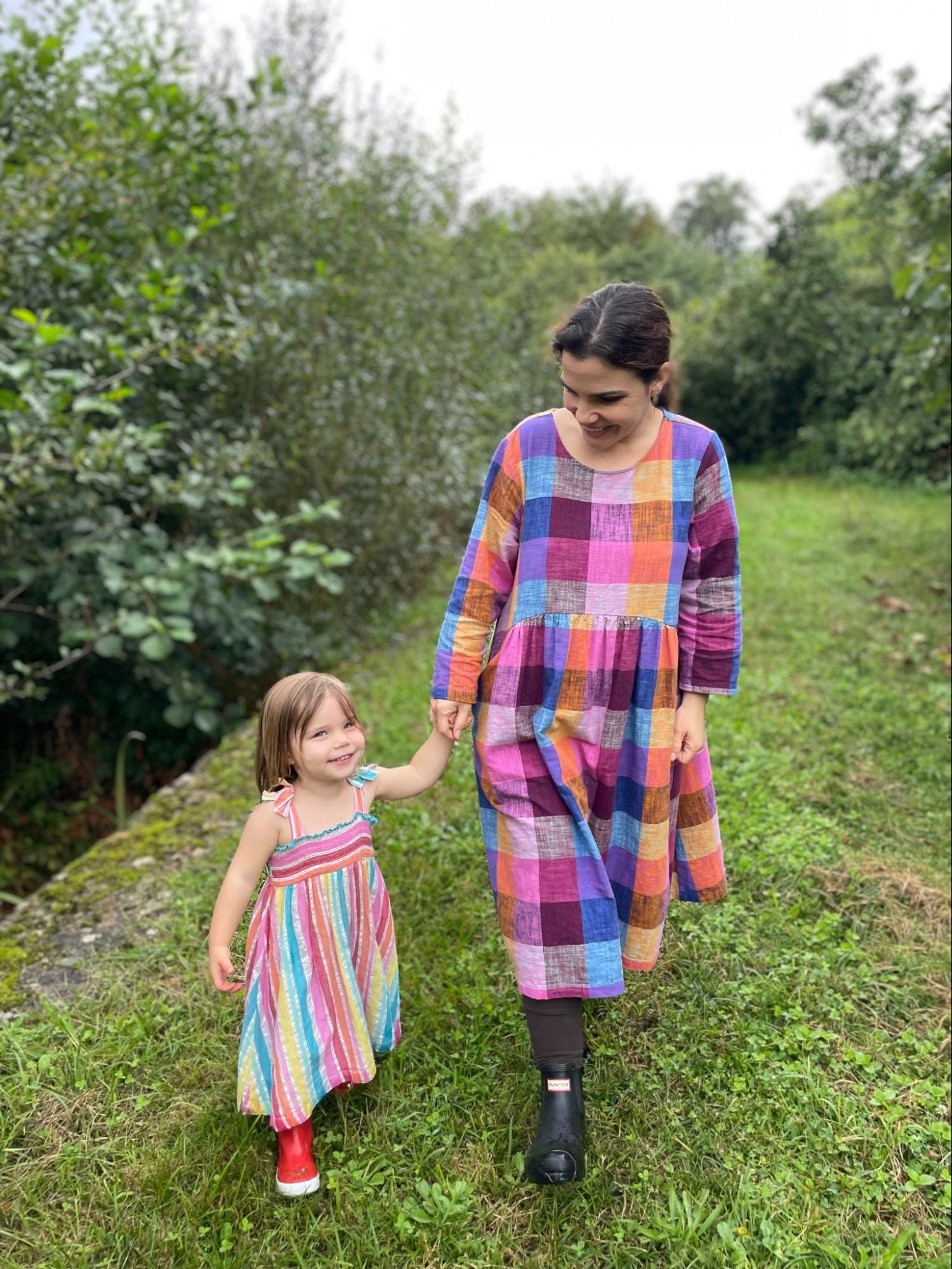
Kamille Longstreet is an American writer living in a small château in rural France that came with a hidden chapel, a three-hundred-year-old boulangerie, a bluebell forest nobody mentioned in the listing, and a rooster named Mr. Darcy. She moved there with her husband and two small children, who now speak better French than either of their parents and have opinions about mousse au chocolat. She writes Once Upon a Castle— about the renovation, the life, the cultural observations, and everything this place keeps revealing when she wasn’t expecting it. If you’ve ever wondered what it actually costs—emotionally, financially, practically — to sell everything and rebuild a life somewhere completely different, that’s what she writes about. Honestly, with humor, and without the highlight reel version.
(You can also find Camille on YouTube and Instagram)

About Sara: I’m a Level 3 Certified Internal Family Systems (IFS) practitioner and women’s spiritual leadership mentor. I’ve spent 25 years helping women build lives and businesses from the truth of who they are — through the her Self podcast, my signature her Self CEO program, 1:1 mentorship, and retreats. elle-même is where I write about beauty, becoming, and creating a life and work that feels like yours.
I’m also the author of three books on women’s spirituality: The Way of the Happy Woman, The Book of SHE, and Handbook for the Heartbroken. My work has been featured in The New Yorker, Newsweek, Yoga Journal, and more. These days, I’m a student of l’art de vivre in Bordeaux, France, with my husband and our rescue dog, Sadie. You can also find me online at saraavantstover.com.
 | A guest post by
|